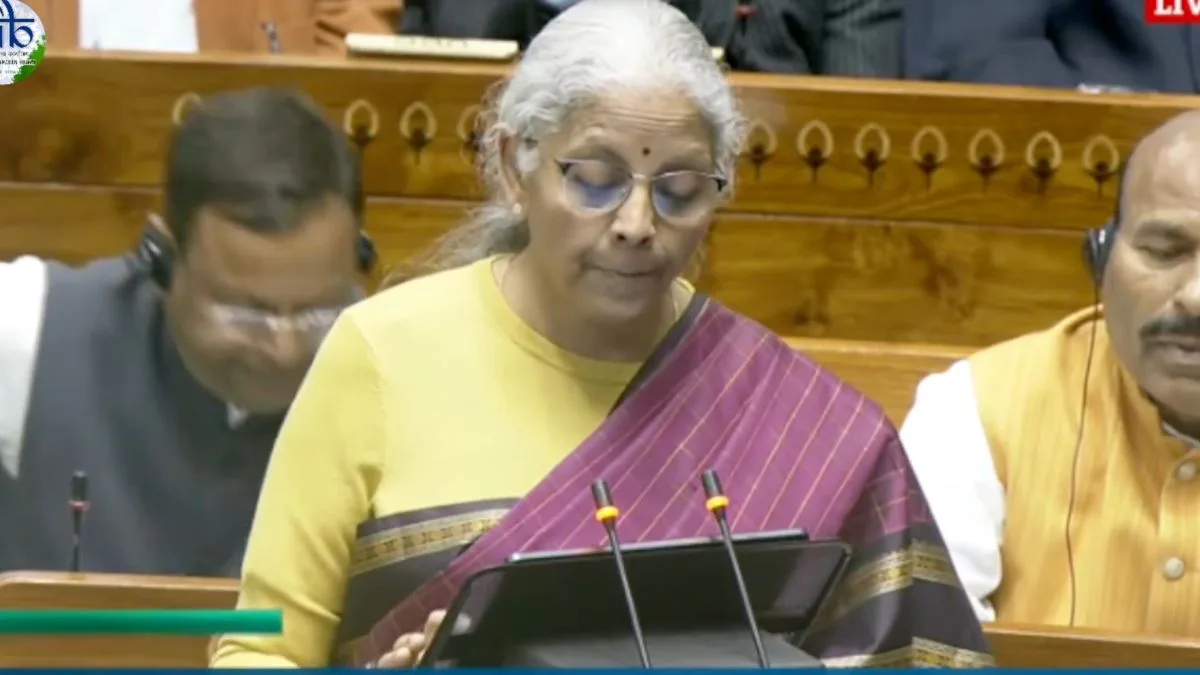
Finance Minister Nirmala Sitharaman on Sunday announced a series of measures to strengthen India’s nuclear energy programme and secure access to critical minerals, outlining them as key pillars of the country’s long-term energy transition and manufacturing strategy in the union Budget for 2026-27.
These include amendments to the Atomic Energy Act and the Civil Liability for Nuclear Damage Act, duty exemptions on critical mineral imports, a policy on recovery of tailings from critical mineral mines, and a Rs 20,000 crore Nuclear Energy Mission to develop Small Modular Reactors.
Advertisement
In her budget speech, Sitharaman said the government will introduce a policy for the recovery of critical minerals from mine tailings, an initiative aimed at improving resource efficiency and reducing import dependence.
Recalling measures announced in the July 2024 Budget, the finance minister noted that basic customs duty (BCD) had been fully exempted on 25 critical minerals not available domestically, while duties on two other minerals were reduced to boost their processing, particularly by micro, small and medium enterprises (MSMEs). Building on this, she announced a fresh round of exemptions.
“I now propose to fully exempt cobalt powder and waste, scrap of lithium-ion batteries, lead, zinc and 12 more critical minerals,” Sitharaman said. The move, she added, would help secure the availability of key inputs for domestic manufacturing.
On the energy front, the finance minister underscored the importance of nuclear power in India’s clean energy roadmap. She said the development of at least 100 gigawatts (GW) of nuclear energy capacity by 2047 is essential to meet the country’s energy transition goals.
To encourage private sector participation, Sitharaman announced that the government will take up amendments to the Atomic Energy Act and the Civil Liability for Nuclear Damage Act. These changes are expected to facilitate greater investment and collaboration in the nuclear sector.
The budget also proposed the launch of a Nuclear Energy Mission focused on research and development of Small Modular Reactors (SMRs), with an outlay of rs 20,000 crore. Under the mission, at least five indigenously developed SMRs are targeted to be operational by 2033.
The combined push on critical minerals and nuclear energy reflects the government’s strategy to strengthen supply chains, support clean energy goals and position India as a global manufacturing hub in the coming decades.